Recently I experienced temporary deafness for over two weeks. Throughout, I kept pushing my GP via multiple visits and tests, finally succumbing to medical intervention being told it was due to an eustachian tube dysfunction associated with an unidentified virus.
This also coincided with my attendance at the International Symposium of Electronic Art (ISEA2024, Everywhen) in Meanjin/Brisbane for 10 days after being on the steering committee for almost two years and also being involved in a number of presentations.
To protect my ears, I decided to take the train (or 2 trains) from Melbourne to Brisbane, contained in a muffled bubble, passing through the wonders of the Australian landscape towards a 10 day program. For the first part of ISEA, I sat in silence during talks, looking more deeply at ways of communicating, and passed on hosting duties to wonderful colleagues.
It was during a site visit in the Australian bush with artist Keith Armstrong (Qld) and his collaborators as part of the forest intelligence project, my hearing almost miraculously and spontaneously hearing. After a couple of hours of walking in bush land and forest, including hugging a 400 years old gum tree, Keith’s version of the story was the group was standing at the top of the hill, under a mother tree, talking about the regeneration project and Indigenous cultures with Angie Abdilla (Old Ways, New). It was then, I sneezed holding my nose and could hear the birds.
The experience opened up my world in ways that were new to me, throughout navigating the world without sound, the generosity of many deaf people who found me and shared with me their stories of deafness and how best for me to navigate public spaces, the dangers of walking on footpaths, across roads, things to be aware of. Some people with born deafness others with acquired deafness at different points of their lives, from youth to older age.
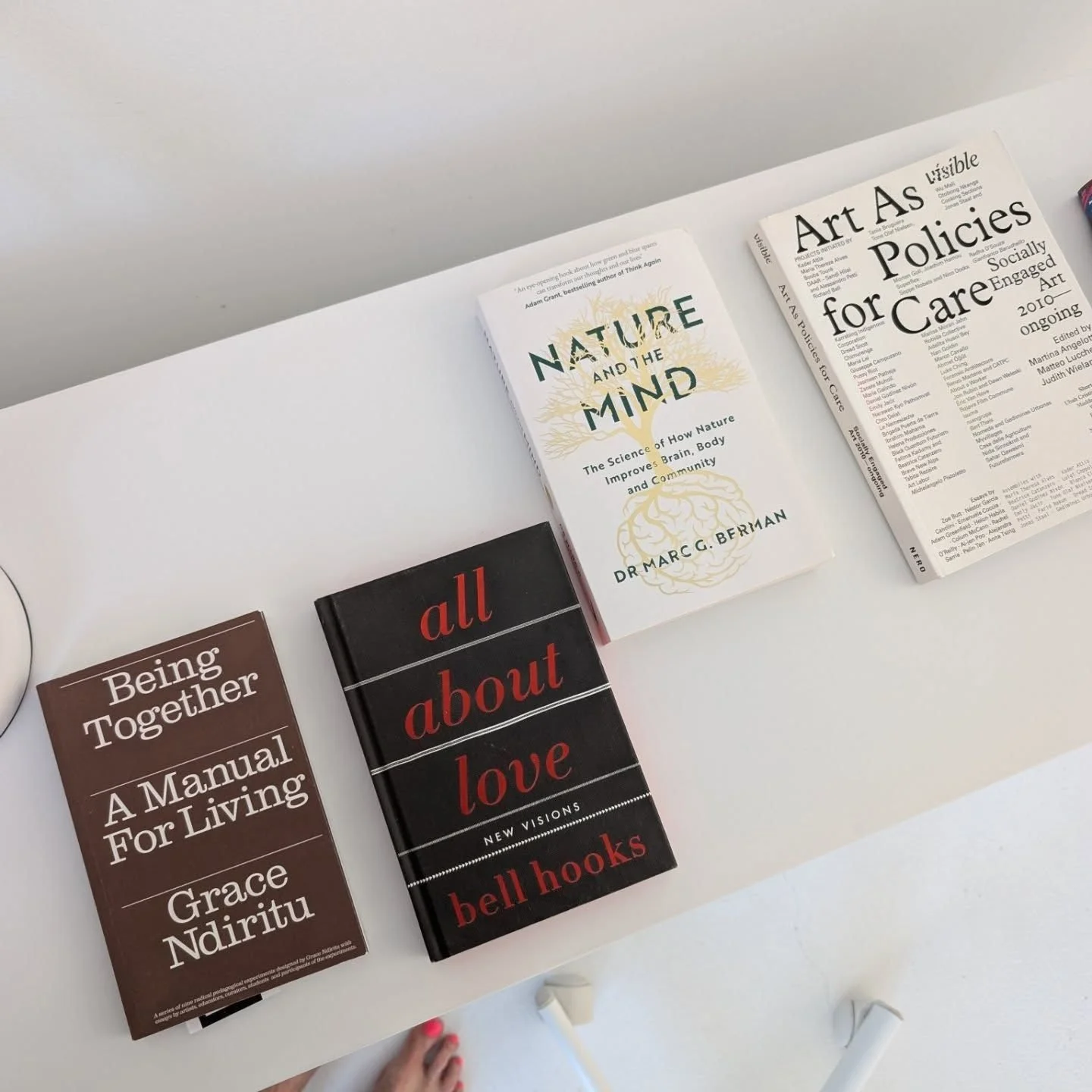
During the long return train journey, without internet connection (connectivity drops out in the XPT in Australia), I read books, I watched the changing landscape across three states, from rainforest to farmed land to country villages and cities. I became more focussed, more one-tracked in my thinking.
With training in a number of health science and wellness modalities and a keen interest in neuroscience, I’m a practitioner of things like meditation, yoga, nutrition and committed to this exploration. I also work and operate at a high frequency, with every tab open and often scattered energies in my down time, doing multiple things at once or thinking about many things at the same time.
What I am taking on now as a practice is one-track mind activity. I’m actually doing one thing at a time. This is changing the way I work, my relationships and the way I’m seeing the world in subtle and not so subtle ways.
I’m finding I am naturally more quality and focussed within my routines, which are shifting to more valued rituals. My awareness of the world is heightened as I notice what is immediate and tangible, things of note. If I am walking, I am walking. If I am reading, I am reading. If I am writing, I am writing. If I am checking emails or messages across various platforms, I am doing that. If I am watching streaming media, I am doing that, when I’m with you I am with you, moving from elsewhere to here.
References:
silent walking https://www.abc.net.au/news/2023-10-08/silent-walking-taking-off-on-tiktok-boosting-youth-mental-health/102938224)
https://www.medicalnewstoday.com/articles/flow-state#effects-on-brain
https://positivepsychology.com/mihaly-csikszentmihalyi-father-of-flow/
https://www.psychologytoday.com/au/blog/the-athletes-way/201504/mindfulness-the-power-thinking-about-your-thinking




![[Image belongs to Jaron Lanier]](https://images.squarespace-cdn.com/content/v1/5a6a6ef22278e75f5940de49/de73c790-f266-4a5a-9fe9-e72a16b9dbf1/images.jpg)